Enabling regulatory solutions for mobile money – GSMA Mobile Money for the Unbanked (MMU)


MMU-Enabling-Regulatory-Solutions-2013

MMU is releasing a policy paper that builds on evidence and lessons learnt globally around the regulatory reforms that enable mobile money to grow. Our aim is to provide a useful tool for regulators and mobile money providers to engage more effectively to create enabling environments for digital financial inclusion.

This paper describes how mobile money is most likely to succeed where there is an open and level playing field that allows non-bank mobile money providers, including mobile network operators (MNOs), to offer financial services. In addition, the paper describes how mobile money services can adequately provide consumer protection, how the challenges of anti-money laundering and combating the financing of terrorism (AML/CFT) compliance can be addressed by promoting risk-based know-your-customer (KYC) procedures, and how cost-effective regulatory solutions can be implemented to develop and set up distribution networks and accelerate customer adoption.

As awareness grows that financial exclusion is a source of risk for the financial system and that financial inclusion reinforces the objectives of financial stability, integrity, and consumer protection, mobile money is increasingly recognised as a means of driving economic and social growth through a cash-lite economy. As such, these regulatory reforms should not simply be items on the regulator’s financial inclusion agenda; they should become central to national strategies for improving financial stability and integrity, protecting financial consumers, fostering economic growth and job creation, and guarding the financial system against the risks of the widespread use of cash. The countries that have embraced the reforms discussed in this paper are ultimately driving innovation in mobile financial services and are building inclusive, secure, and efficient financial sectors.

GSMA’s Mobile Money for the Unbanked (MMU) announces the results from the 2012 Global Mobile Money Adoption Survey


MMU_State_of_industry

GSMA’s Mobile Money for the Unbanked (MMU) programme is releasing the findings of the 2012 Global Mobile Money Adoption Survey. MMU gathered data from 78 mobile money service providers, to create what we believe to be the most comprehensive assessment of mobile money for the unbanked services available today. With the 2012 Adoption Survey, we are able to share deeper insights on not only the number of mobile money customers, but also on how customers are using these services. In addition, we have taken a closer look at how the fastest growing deployments are positioning and managing mobile money to meet the needs of their customers.

The mobile money industry is continuing to grow rapidly…

The research shows impressive growth in the number of active mobile money users; in 2012, we counted approximately 30m active mobile money customers, who undertook over 220 million transactions totaling $4.6 billion in transaction value during the month of June 2012.

An increasing number of deployments are achieving significant scale. We identified six services with more than 1m active customer accounts, and in the last 12 months, three of them have crossed the 1 million ‘active customers’ threshold. The number of active customer accounts is now growing significantly faster than the number of registered customer accounts at the global level.

… especially in Sub-Saharan Africa

Of the 150 live deployments globally, 56% of them are in Sub-Saharan Africa. Mobile money services are already available in 34 of the 47 countries in this region and the majority of planned deployments are also in Sub-Saharan Africa. In June 2012, there were twice as many mobile money users than Facebook users in Sub-Saharan Africa.

Mobile money is contributing significantly to financial inclusion

The data we collected give an interesting insight into the contribution of mobile money to financial inclusion globally. There are now more mobile money accounts than bank accounts in Kenya, Madagascar, Tanzania and Uganda, and more mobile money agent outlets than bank branches in at least 28 countries.

MWC2013: Mobile Money and the underbanked


We tend to view mobile payments as a trend for developed economies. Debates such as NFC vs QR code focus on changing user behavior from one payment method to another, and value-add debates center around retail, marketing and spend.

But for billions of unbanked and underbanked people across the world, mobile payments has the ability to impart much more meaningful change. That point was made abundantly clear through the Latin American and Middle Eastern/African panels during MasterCard’s Mobile World Symposium at Mobile World Congress.

The two panels brought together seven speakers involved in all aspects of the mobile payments business. One of the most interesting distinctions made early in the seminars was the need for different strategies when attempting to bring mPayments to both developed and emerging populations alike.

“For the first segment, it’s easy to create value because they badly need this service,” Roger Sole of TIM Brazil pointed out. “Mobile financial inclusion is something that is new for a lot of these people, and it’s going to be their first experience with banking.

The highest segment, they don’t necessary feel like they need it. I’m sure that once you use it you can’t get rid of it, like all technologies. But it’s very difficult to make this adoption grow at the beginning. “

Despite speaking in a different seminar on an entirely different part of the globe, Srinivas Nidugondi of Mahindra Comviva gave a similar answer when asked to describe the state of mobile payments in Africa and the Middle East.

Nidugondi’s response was “way to go,” and it’s meaning was two-fold. In some areas, those words were meant to be read with enthusiasm as “way to go!” as mPayments have already begun to shift the market. Certain other markets lead to a reading of 
“[we have a] way to go,” as mobile payments have yet to become widely adopted in many areas in which they could be of great use.

While speakers for both panels spoke at length about business models, open vs. closed loop practices and how banks, telcos and networks co-exist in terms of bringing mobile payments to emerging markets, many of the most interesting conversations centered around education.

“The biggest challenge to me isn’t form factor, POS terminals, all those gadgets: it’s the training and education of the people. We telcos tend to talk about mobile money, it’s a great topic and everyone says it will change peoples lives, but in reality until we all put money where our mouth is and go on street and show people,” said George Held of Etisalat Group. “It’s dirty, its not elegant, it’s not pleasant … but you have to go educate.”

Held’s comment sparked an interesting debate between the speakers for the African and Middle Eastern panel, centering on whether direct education is the best method among unbanked populations. One panelist, Nick Dent, of Ooredoo, argued that populations could become largely self-educated once their introduction to mobile money was complete.

“I think there’s a very common misnomer, which is that low income equals low intelligence. I don’t buy into that at all. The lowest income people tend to be amongst the most innovative when given a chance, and as long as you’ve got a service that is fundamentally cheaper than an alternative to them, I think you’ll these groups incredibly innovative,” Dent said.

“I think you’ll be amazed at the type of innovation that will happen in these societies if you give them these tools.”

Held disagreed, and pointed out that while the need for mobile money is obviously great in unbanked markets, direct education should still be viewed as a priority.

“Africa is the center of innovation nowadays…because hunger is the mother of innovation. We see lots of African companies putting huge resources into educating consumers on the street, where a truck actually goes to a village or a university and actually shows you how to use the service” he pointed out. “Until you do this, it’s all theory.

But while the panelists disagreed on the best way to educate native populations, none undersold the potential impact mobile payments could have on their ways of life.

“This set of the population, which has not been touched by organized financial services, will they be comfortable by technology? I believe for them this is the most important piece of technology they will ever receive in their lives. It’s a question of really plugging the two of them together,” said Nidugondi. “And that’s why there’s the belief that so much innovation is coming from this region: it’s out of necessity. They need basic banking services.”

“We’re giving financial inclusion to a segment that badly needs it,” Sole said during the Latin American panel. “It’s almost a social service.”

Which method of education do you think is most likely to yield success? How would you reconcile the differences in demographics in emerging markets while introducing mobile money? Let us know in the comments below!

Payments Cards & Mobile – Payments industry intelligence: 7th annual advanced payments survey results


Advanced_Payments_Report_2013

Over the past seven years the survey has charted the development of mobile and other advanced payments, capturing expectations, opinions, and perspectives from across the globe. Survey results have been presented at the GSMA Mobile World Congress in Barcelona as well as being quoted in numerous reports and industry publications.

As an industry professional and observer, we are certain you will find this year’s results informative.

(results analysed and report authored by Edgar, Dunn & Company)

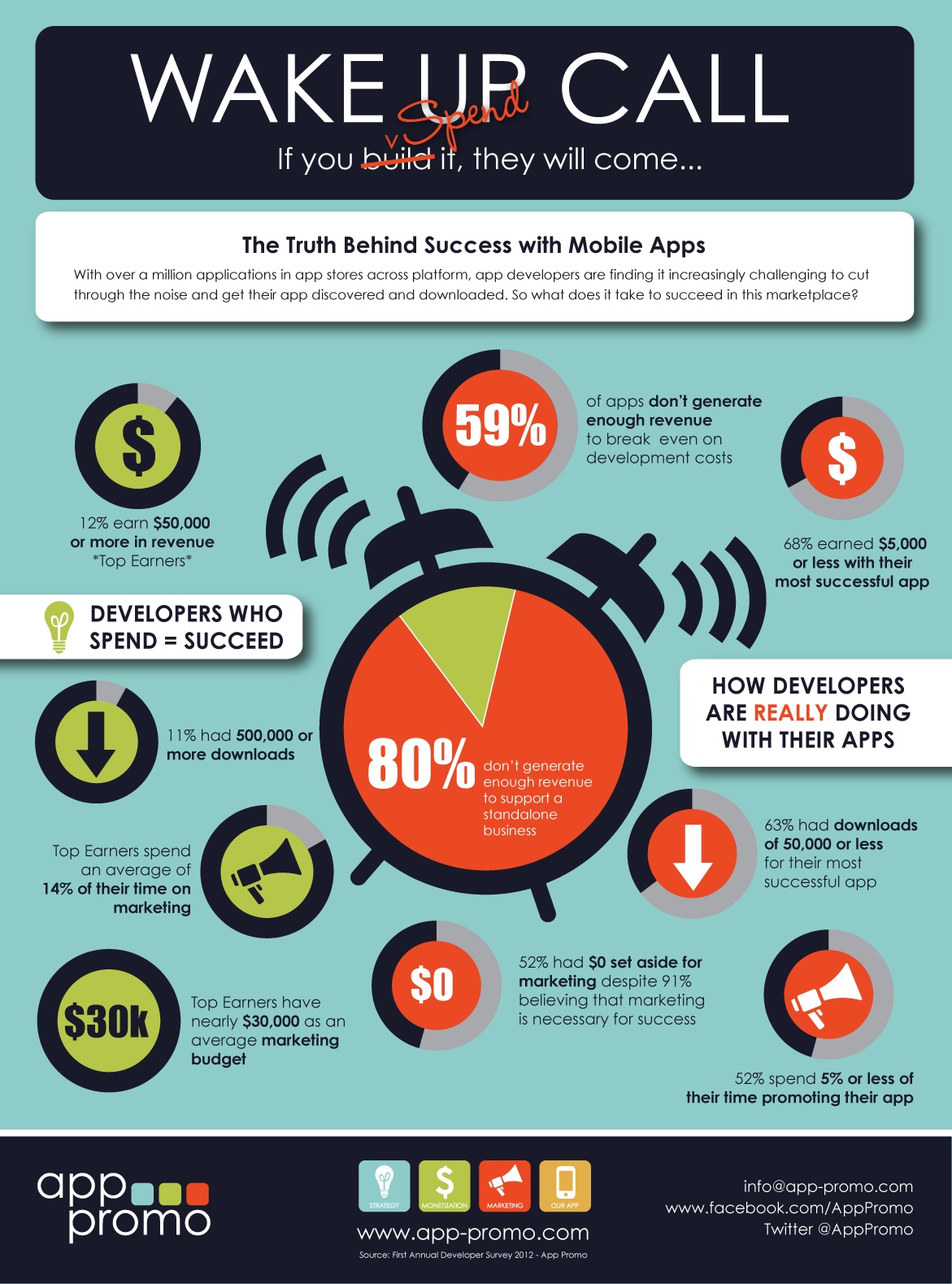
Wake up call – If you spend it, they will come [Infographic]


The results are in from our First Annual Developer Survey we completed in April of this year and we have used the data to create our very first Infographic. Our goal with this survey was to shed light on the truth behind what it takes to be successful with your mobile app. We hope that this information can be used to help you better your app as a business.

Re-posts are welcome to help spread the word on this very important topic to the app developer community so feel free to save and post this Infographic on your own blog or site.

Link


Mobile World Congress 2013 (Barcelona, Spain): Live coverage articles

Link


Mobile World Congress 2013 (Barcelona, Spain): Show wrapup (video highlights)

Link


Mobile World Congress 2013 (Barcelona, Spain): Day 4 (video highlights)

Link


Mobile World Congress 2013 (Barcelona, Spain): Day 3 (video highlights)

Link


Mobile World Congress 2013 (Barcelona, Spain): Day 2 (video highlights)